














Think London Underground cost is out of control? Think again! This guide is your ticket to cheaper travel across the capital, where a single peak journey can top £5 in the central zones. It is widely known that London has one of the world’s most expensive public transportation services. Especially during peak times, one-way London underground costs can be as high as short-haul flights to mainland Europe. However, you can take control of these costs and significantly reduce them.
Based on my personal experience, I have managed to save a significant amount on London’s public transport over the years. When I share these methods with my friends, they are often surprised at the potential savings I generate. So, you, too, can achieve substantial savings by following these tips. Looking to see which National Railcard cuts 1/3 off your London Tube and train fares? Jump straight to our UK Railcard Matcher ↓ to find the best discount card for your age and travel pattern. I’ll expose insider secrets to slashing those peak-time London Underground prices, help you find the best deals on London Underground tickets, and uncover hidden discounts on buses and National Rail.
I’m writing this article to pass on my knowledge to you. Whether you’re a daily commuter trying to make your paycheque stretch further or a tourist navigating London transport fares for the first time, I’ve got you covered with money-saving tips for everyone. While some of this information may be familiar to you, I also have deeper insights for those who want to delve further. If you are already familiar with all these tips, let us compare notes and collaborate so we can all benefit from each other’s experiences.
Decoding London’s Transport Zones and Fares
This section is for everyone, whether you’re a newcomer to London, a resident looking for a change, or a tourist seeking adventure. I’ll provide vital information that’s relevant to you all, ensuring no one is left out.
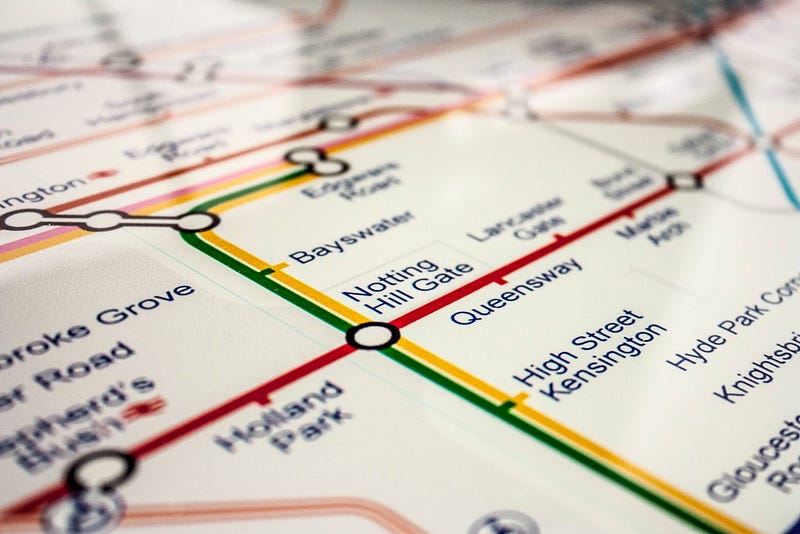
When you first look at the public transport map of London, it may seem quite overwhelming, but once you get used to it, it’s easier than it seems. London uses a Zone system similar to most European cities, so you only pay for the distance you travel. When you use the London Underground and National Rail Services, you simply tap your Oyster Card (the official travel card of London) or contactless debit/credit card on the yellow readers when you enter and exit the station. Sometimes, you may also need to tap your card on the pink readers when travelling between National Rail Services and the London Underground. Doing this proves to the system that you bypassed the expensive Zone 1, ensuring you get charged the cheaper routing fare.
The system automatically calculates your fare based on the zones you travel through. If you use TFL bus services (the red ones, including double-deckers), you only need to pay when you board the bus. This is officially known as the ‘Hopper Fare’: after you make your first payment of £1.75, you can take unlimited other TFL buses or trams for free within 1 hour (official rules verified via TfL Bus & Tram Fares).
2026 London Underground & TfL Fare Cheat Sheet
To avoid overpaying, never purchase traditional paper cash single tickets from the vending machines—they cost more than double the pay-as-you-go rate. Here is how official TfL fares and daily caps compare across the major zones using Contactless or an Oyster card (verified directly from the live TfL Caps & Travelcard Registry and the TfL Single Fare Finder):
| Zones Travelled | Peak PAYG Single | Off-Peak PAYG Single | Daily Fare Cap | Paper Cash Single (Avoid!) |
|---|---|---|---|---|
| Zone 1 only | £3.10 | £3.00 | £8.90 (Zones 1–2) | £7.00 |
| Zones 1 to 2 | £3.10 | £3.00 | £8.90 | £7.00 |
| Zones 1 to 3 | £3.60 | £3.10 | £10.50 | £7.00 |
| Zones 1 to 4 | £4.80 | £3.60 | £12.80 | £7.00 |
| Zones 1 to 5 | £5.30 | £3.80 | £15.30 | £7.00 |
| Zones 1 to 6 (e.g. Uxbridge) | £5.90 | £4.00 | £16.30 | £7.00 |
| Zone 1 to Heathrow (Piccadilly) | £5.90 (Anytime) | £5.90 (Anytime) | £16.30 | £7.00 |
| TfL Bus & Tram (Any Zone) | £1.75 (Hopper) | £1.75 (Hopper) | £5.25 | N/A (Cashless) |
You must understand two key points about London transport pricing: “Pay as you go” and “Caps and Travelcards.”
“Single Pay as you go” is, as we all know, a basic tariff. So you pay as you go.
Another critical point to understand is ‘Caps ‘. In simple terms, this means there’s a maximum amount you can spend in a day on public transport. Once you reach this limit, you won’t be charged for any additional journeys you make that day. This applies to the London Underground, TFL Buses, and National Rail Services, and you can continue to use them for free and unlimited travel until 04:29 the following morning (the official TfL fare day runs from 04:30 to 04:29). The capped prices vary depending on the zone you are travelling to (thresholds published on the TfL Fare Capping Guide and National Rail Pay As You Go).
The ‘Travelcard‘ is an excellent option for local commuters. To get one, you first need an Oyster Card. You can load weekly, monthly, six-monthly, and annual travel plans onto this card in advance, allowing you to travel unlimitedly at reduced prices. This is particularly beneficial if you make the same journey regularly, as it can save you money compared to paying for each trip individually.
But do you think everyone is offered the same price? Of course not!
From now on, I will first discuss the discounts and savings everyone can benefit from and then move on to specific groups:
Essential Tips for Cheaper London Travel

Let’s start by discussing essential ways to save on transportation in London. This information is relevant to anyone using public transport in London. I’ll cover the fundamental money-saving tips for transportation. Even if this is not of interest to you, I suggest reading the other sections, too. For instance, in the tourist section, I’ll also be sure to cover airport transfers, which could be helpful to you. I aim to ensure you’re well-informed and guided in your London transportation journey.
- Avoid travelling during peak times unless necessary: To save money, avoid using the London Underground and National Rail Services from 06:30 to 09:30 and 16:00 to 19:00 on weekdays (not including public holidays). There is an exception: If you travel from a station outside Zone 1 to a station in Zone 1 between 16:00 and 19:00 on weekdays, you won’t have to pay peak-time fares since these are considered off-peak times. This rule doesn’t apply to TFL buses, so you can travel at the flat £1.75 rate at any time of the day.
- Consider using outer rail orbital lines (formerly the London Overground, now renamed into 6 distinct lines): What was historically known as the monolithic London Overground network has been officially divided by TfL into six distinct named lines—the Lioness (Euston to Watford Junction), Mildmay (Stratford to Richmond/Clapham Junction), Windrush (Highbury & Islington to New Cross/Clapham Junction/Croydon), Weaver (Liverpool Street to Enfield/Cheshunt/Chingford), Suffragette (Gospel Oak to Barking Riverside), and Liberty line (Romford to Upminster)—each with its own distinct parallel line colours on the Tube map (details on official TfL London Overground Naming & Routes). These orbital services skirt around the outer zones, allowing you to bypass expensive Zone 1 journeys entirely. For example, transferring between Thameslink and the Mildmay or Windrush line can noticeably reduce your single fare. While orbital trains can make more frequent stops than express radials, the fare savings on cross-capital journeys are substantial.
- The Pink Reader interchange bypass: When transferring between outer rail and tube routes at major interchange hubs (such as Stratford, Highbury & Islington, Canada Water, Whitechapel, or Clapham Junction), always look out for the distinctive pink card readers located on transfer walkways and platforms (detailed route guidance on TfL Pink Card Reader Guidance). Tapping your card on the pink reader informs the TfL system that you bypassed Zone 1 entirely, slashing your fare down to outer-zone pricing.
- Do not cross the Thames River unnecessarily: When travelling in London, remember that crossing the Thames River on certain rail lines can push you into additional fare zones. If you are travelling between the north and south sides of the river, consider getting off at the stop before crossing and walking across one of London’s scenic pedestrian bridges if it’s convenient.
- Exploit Zone 1/2 dual-boundary stations: When commuting into Central London from outer suburbs (Zones 3–6), you can slash your fares by terminating at a dual-zone boundary station. Key stations including Earl’s Court, Notting Hill Gate, Vauxhall, and Elephant & Castle sit officially on the border of Zone 1 and Zone 2. When you arrive from outer zones and tap out here, TfL’s billing computer automatically treats the journey as ending in Zone 2, completely exempting you from the expensive Zone 1 surcharge! Other close-in Zone 2 stops worth walking from include Camden Town, Kentish Town, Hoxton, Whitechapel, Bermondsey, and St John’s Wood.
- Use rental bikes and e-scooters for short hops: You have the option to use rental bikes or scooters for all or part of your journey. Fortunately, London has numerous bike-sharing platforms, including Lime, Forest, Voi, and Santander Cycles. Purchasing a daily pass or multi-minute bundle from these platforms can save you even more money. Both biking and scootering are healthy, enjoyable, and cost-effective options that help you avoid crowded underground carriages.
- Buy tickets from train ticket aggregators for outer rail journeys: Consider purchasing tickets from digital booking specialists instead of solely tapping Oyster or Contactless Cards when travelling on longer National Rail legs. Train ticket platforms such as Omio, Trainpal, LNER, and Trip.com often offer split-ticketing algorithms and promotional vouchers that beat standard walk-up station tariffs.
- Use Network Railcard, Gold Card, or Two Together Railcard for National Rail trips: If you’re under 31, an individual 16–25 or 26–30 Railcard is the ultimate choice because it can be linked directly to your physical Oyster card for daily Tube discounts (detailed steps below). If you’re over 31, explore three powerful alternatives for outer rail journeys: the Network Railcard, the Two Together Railcard, and the Annual Gold Card. Note the crucial rules: The Network Railcard gives 1/3 off off-peak rail fares across London and the South East, but carries a £13.00 weekday minimum fare (Monday to Friday, except July/August and bank holidays), making it effective primarily for longer weekend excursions. The Two Together Railcard grants 1/3 off off-peak rail when two named adults travel together after 09:30 on weekdays. Crucial caveat: neither Network nor Two Together Railcards can be linked to Oyster pay-as-you-go—they apply strictly to National Rail paper and digital tickets. Compare verified promotions on our Railcard Deals & Discounts hub. Lastly, the Gold Card offers nationwide 1/3 rail discounts and CAN be linked to Oyster when you purchase an Annual Travelcard.
- Register your payment method with TfL for automated refunds: I strongly recommend registering all your travel cards with TfL by creating a free account on their official website, whether you use an Oyster or a Contactless bank card. This protects your balance if a card is lost or stolen and unlocks statutory Service Delay refunds: if your journey on the Tube or DLR is delayed by 15 minutes or more, or your journey on the London Overground or Elizabeth Line is delayed by 30 minutes or more, you are entitled to a full refund for that journey as long as you submit a claim within 28 days (claim directly via TfL Refunds & Delay Repay).
- Review your journey history to catch incomplete tap charges: If a gate reader fails to register your tap-in or tap-out, TfL’s billing computer automatically assesses a “maximum fare” penalty (up to Zone 9 pricing). By checking your online TfL account weekly, you can easily spot and rectify incomplete journeys with a single click to receive an automatic refund.
- Pay with a rewards or cashback card on daily transit: Because public transportation is a recurring everyday expense, using a dedicated rewards card turns your commuting into air miles or cashback. Reward cards like AMEX and lifestyle credit cards like Yonder earn points on every tube and bus tap that you can redeem for dining or travel perks.
- Avoid Card Clash and activate Apple Pay Express Transit: Never tap your wallet or phone case directly against the yellow reader if it holds more than one contactless card or an Oyster. TfL’s system will experience “Card Clash”, either rejecting the tap or billing one card on entry and another on exit, which incurs two separate maximum fare penalties! If using an iPhone or Apple Watch, turn on Express Transit Mode in your Apple Wallet settings: this enables you to tap in and out at barriers instantly without waking your screen or authenticating with Face ID, and keeps working for up to 5 hours even after your device battery runs out.
- Check fares with TfL’s Single Fare Finder before departing: When planning unfamiliar cross-London journeys, consult TfL’s official Single Fare Finder tool. While navigation apps like Citymapper or Google Maps give excellent real-time directions, they frequently fail to display discounted railcard routing tariffs.
Extra Savings on London Underground Cost for Students & Young Adults

If you are a student, apprentice, or young adult living in or visiting London, you have access to the biggest transit discounts in the capital. Here is how to unlock them step by step:
- Link your National Railcard to your Oyster Card for an instant 34% discount: This is the single highest-value transit hack in London. A standard 16–25 Railcard or 26–30 Railcard (which you can purchase right up until the day before your 31st birthday) gives you 1/3 off all off-peak Tube, DLR, London Overground, and Elizabeth Line journeys, plus a 34% reduction on your off-peak daily cap (dropping the Zones 1–2 daily cap from £8.90 down to just £5.90, verified via TfL National Railcard Discount Portal and National Railcard UK)! Grab your card online via Railcard UK, then take it along with your physical Oyster card to any London Underground station. Ask a TfL staff member at the ticket barriers to link the Railcard to your Oyster at the ticket machine. It takes less than two minutes and saves hundreds of pounds per year.
- Apply for an 18+ Student Oyster photocard (and link your Railcard!): If you are enrolled in full-time education at a recognised London college or university, you can apply for an 18+ Student Oyster photocard to receive 30% off adult-rate Travelcards and Bus & Tram season passes. Essential warning: the Student Oyster by itself provides zero discount on daily pay-as-you-go Tube fares! To unlock 34% off off-peak pay-as-you-go journeys, you must take your 18+ Student Oyster to a station barrier and ask staff to link your 16–25 National Railcard onto it. This gives students the ultimate setup: 30% off season passes plus 34% off pay-as-you-go.
- Stack split-ticketing apps for outer travel: When journeying beyond the TfL zones to university towns like Oxford, Cambridge, or Brighton, use rail comparison platforms such as TrainPal and Trip.com to stack student railcard codes on split fares.
London Travel Hacks for Tourists and Visitors

Visiting London for a holiday or weekend break? While London is renowned for its cultural landmarks, transportation expenses can quickly bite into your travel budget if you fall for tourist traps. Here are the golden rules for navigating London affordably as a visitor:
- Skip buying a physical Oyster Card: Tourists are frequently advised to buy an Oyster card at the airport, but this incurs a non-refundable £7 to £10.50 upfront card fee at vending machines. Instead, simply tap your existing contactless bank card, Apple Pay, or Google Pay for identical pay-as-you-go rates and automated caps with zero card purchase fees. To avoid foreign currency transaction markups when visiting London, pay with lifestyle cards like Yonder, which features zero FX fees on transit and earns curated dining rewards across London for every single tube tap. For UK residents, using an Avios-earning credit card like American Express lets your routine daily commute directly subsidise British Airways flights and cabin upgrades.
- Children under 11 travel 100% free; 11–15s get half-price: If travelling as a family, never buy tickets for children under 11. Up to four children under 11 travel completely free (£0.00) on the Tube, DLR, London Overground, Elizabeth Line, and all TfL buses when accompanied by a paying adult (simply ask station staff to open the wide luggage gate). For children aged 11 to 15, visit any Tube station ticket window and ask staff to add the Young Visitor Discount to a standard Oyster card: this gives your child a 50% discount on adult pay-as-you-go fares and daily caps for up to 14 days.
- Ditch airport express trains in favour of commuter alternatives: Special airport express services charge exorbitant premiums for negligible time savings. Compare your options carefully:
- Heathrow Airport: The Heathrow Express charges an exorbitant £26.00 single fare for a 15-minute dash to Paddington. Instead, take the modern Elizabeth Line (approx. 28 minutes to Paddington for £14.60, or 35 minutes into Tottenham Court Road in the West End for £15.50 anytime pay-as-you-go) or the classic Piccadilly Line (50 minutes direct into central London for just £5.90 anytime). Airport bonus hack: transfers between Heathrow Terminals 2 & 3, Terminal 4, and Terminal 5 on the Elizabeth Line and Heathrow Express are 100% free (£0.00)—simply tap your contactless card or grab a free inter-terminal transfer ticket at the station machines.
- Gatwick Airport: Rather than the overpriced Gatwick Express (£21.80+), take a regular Thameslink or Southern train direct to London Bridge, Blackfriars, or St Pancras. You can tap in with contactless for exactly £10.70 Off-Peak (or £19.20 during Peak hours), saving almost 50% for virtually identical journey times.
- Stansted & Luton Airports: Book advance coach tickets on National Express or platforms like Omio, Flibco, and Terravision where fares often start below £10 when booked ahead. For a complete price, frequency, and booking breakdown across all UK and European airport coach routes vs trains, see our companion deep dive:
- Pair transit with major sightseeing passes: If you are planning an intensive sightseeing itinerary that includes the Tower of London, Westminster Abbey, and Windsor Castle, check whether combining attraction admissions with our London film and sightseeing guide or a city pass from platforms like Tiqets delivers package savings over buying individual admissions.
- International rail arrivals via Eurostar and Interrail: If you are arriving from mainland Europe via Eurostar into St Pancras International, remember that Eurail and Interrail Global Passes cover National Rail services throughout Great Britain (including Thameslink and Elizabeth Line central core stations), allowing seamless rail connections across the UK.
Your London Travel Savings Checklist
Navigating London’s transport network doesn’t have to be a costly affair. By understanding the fare system and utilising the tips outlined in this guide, you can significantly reduce your travel expenses. Whether you’re a local commuter or a first-time visitor, here is your essential London transit savings checklist:
- Always tap with Contactless or an Oyster card: Never purchase paper single tickets from station vending machines.
- Take advantage of the Hopper Fare: Unlimited journeys on all TfL red buses and trams within 60 minutes for a flat £1.75.
- Shift outside peak commuting hours: Avoid travelling on the Tube between 06:30–09:30 and 16:00–19:00 on weekdays whenever your schedule permits.
- Tap the pink readers when bypassing Zone 1: Always use the pink card readers at outer interchange stations to secure non-Zone 1 discounted rates.
- Link your Railcard to your Oyster: Unlock a guaranteed 34% reduction on off-peak Tube fares and off-peak daily caps.
- Monitor weekly spend via Contactless: Enjoy automatic Monday-to-Sunday weekly capping without committing to a physical travelcard.
- Walk short central station hops: Many central stations (like Leicester Square to Covent Garden) are only 400 metres apart and much faster to walk than taking the train.
- Register your card on TfL.gov.uk: Review transaction statements to claim automatic refunds for delays and gate mis-taps.
Quick Wins for Cheaper London Travel
Always pay with contactless or an Oyster
Contactless and Oyster pay-as-you-go are capped daily and weekly, so you never pay more than a travelcard would for the same journeys. Paper single tickets are far more expensive, so avoid them unless you have no other option.
Use a railcard to cut fares by a third
If you are eligible, an individual 16–25, 26–30, or Senior Railcard can be linked directly to your physical Oyster card to slash 34% off off-peak Tube, DLR, and Elizabeth Line fares, as well as dropping your off-peak daily cap to just £5.90. The modest annual cost of the Railcard is typically recouped within just a few return journeys.
Travel off-peak where you can
Peak fares apply on weekday mornings (06:30–09:30) and weekday evenings (16:00–19:00). Shifting your journey just outside those windows, or walking short hops between central stations, noticeably lowers your daily spend.
Interactive Matcher
Find Which UK Railcard Saves You 1/3 on Your Routes
Tell us your age, whether you travel solo or with a partner, and your commuting habits. Our engine matches you with the exact National Railcard to link to your Oyster card.










Leave a Comment
Join the community discussion
Sign in to share verified discount codes, report expired deals, or connect with fellow smart savers.
No comments yet. Be the first!
Be the first to share an active discount code, referral link, or shopping experience with our community.