













Step into the magical world of Harry Potter! Ever wondered where those iconic scenes were brought to life? This guide unveils the enchanting Harry Potter filming locations hidden in plain sight across London — more than 20 real-world spots spanning all 8 films. From the bustling King’s Cross Station, where Harry first boarded the Hogwarts Express, to the historic Leadenhall Market, the inspiration for Diagon Alley, London is a treasure trove of wizarding wonders.
J.K. Rowling‘s magical world, born from a delayed train journey in 1990, has captivated millions worldwide. Now, you can experience the magic firsthand by exploring these real-life locations, each with its own fascinating history and unique charm. Whether you’re a die-hard Potterhead or simply curious about the city’s cinematic connections, this guide will lead you on an unforgettable journey through the real-life locations that inspired the films. So grab your wand (or your Oyster card!), and let’s embark on a magical adventure through London!
Getting Around:
Navigating London is a breeze thanks to its extensive public transportation network. The London Underground, affectionately known as the Tube, is your best bet for getting around quickly and efficiently. Check out our comprehensive London Underground guide article, which provides a detailed overview of mastering the Tube, including valuable tips on using Oyster cards, understanding zones, and effectively navigating the network. Many of the Harry Potter filming locations are within walking distance of each other, so put on your comfy shoes and get ready for a magical walking tour! Alternatively, hop on a red double-decker bus for a scenic journey and an authentic London experience.
We won’t delve into it here since it’s not in London, but many fans still wonder, “Where are the Hogwarts buildings?” or “Where is Hogwarts filmed?“. As a bonus, Hogwarts was filmed at Alnwick Castle in England. However, as most of these settings were brought to life at the Wizarding World of Harry Potter Studios, we’ll leave it up to you to decide if Hogwarts is real.
King’s Cross Station: Platform 9 3/4 and the Hogwarts Express
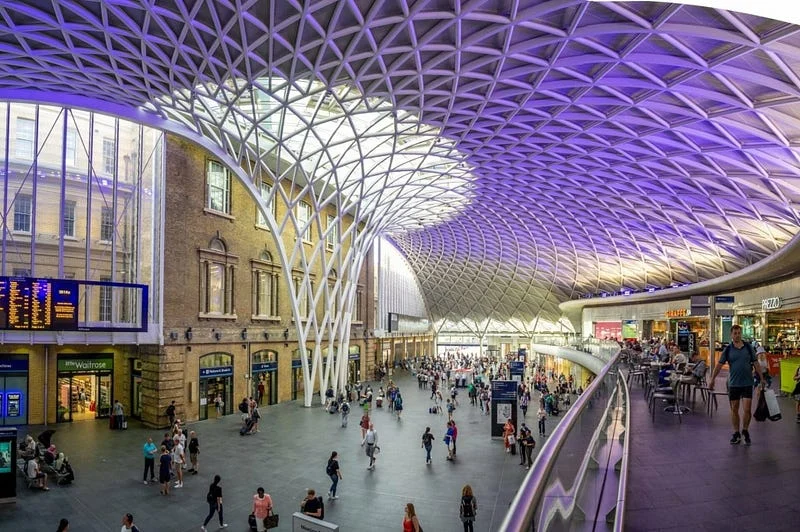
Ready to disappear through the brick barrier of Platform 9 ¾? King’s Cross Station, a bustling mainline terminus, is an essential pilgrimage for any Harry Potter fan. This is where the cinematic magic began — Harry‘s first journey aboard the Hogwarts Express, the emotional September 1st farewells, and countless pivotal moments. In the original films directed by Chris Columbus, the departure scenes were actually filmed between Platforms 4 and 5 (documented by the Transport for London (TfL) Film Office transit archives and Historic England list entry #1078326), as platforms 9 and 10 are separated by open railway tracks rather than brick dividing arches. Today, King’s Cross honours this wizarding heritage with a permanent embedded luggage trolley photo opportunity and an official Harry Potter shop in the modern Western Concourse.
Today, King’s Cross Station remains a major transportation hub, connecting London to destinations across the UK. Millions of passengers pass through its historic halls each year, unaware that they are walking in the footsteps of Harry Potter and his friends.
Don’t miss:
- Snapping a photo at the Platform 9 ¾ sign with a trolley.
- Visiting the Harry Potter Shop for magical merchandise.
- Marvelling at the replica of the Hogwarts Express.
St Pancras International Station: Where the Hogwarts Express Takes Flight
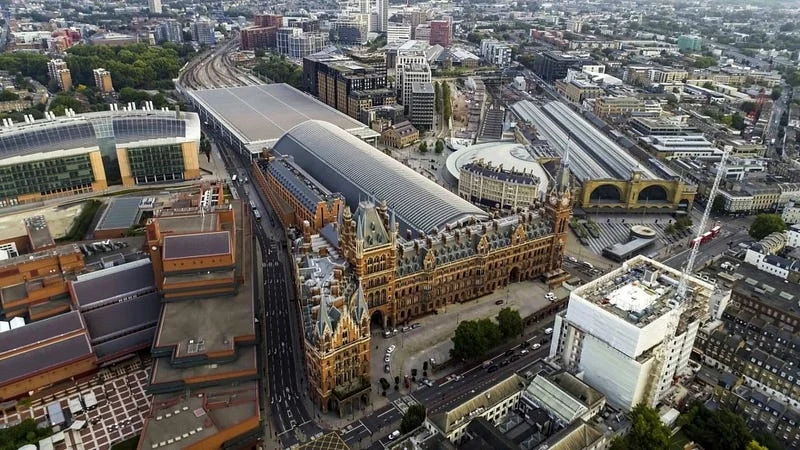
Did you know that St Pancras International Station played a starring role in the Harry Potter films? This architectural masterpiece served as the backdrop for several key scenes, including the magical departure of the Hogwarts Express (verified in the Film London production database). Remember Ron and Harry struggling to board the train in their enchanted Ford Anglia? Or the Weasley car taking flight from the station’s grand exterior, designed by Sir George Gilbert Scott and registered under Historic England list entry #1342037?
This grand Victorian station, also a luxurious hotel, now serves as a major international and domestic railway hub (like Eurostar trains to Mainland Europe), connecting London to destinations across Europe and the UK. Its revitalised spaces now host a variety of shops, restaurants, and even art installations, making it a destination in its own right.
Explore the station:
- Admire the stunning Victorian architecture.
- Picture the scenes from the films coming to life.
- Grab a bite to eat at one of the many cafes and restaurants.
London Zoo: The Famous Reptile House
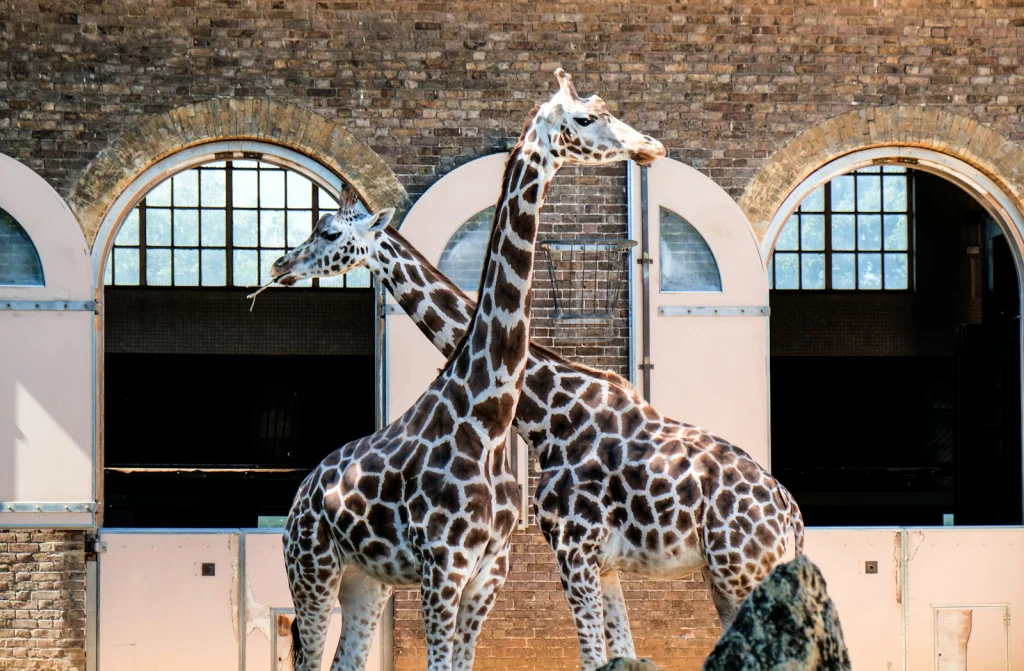
If you want to go back to the very beginning of Harry’s magical discovery, you must visit the Reptile House at London Zoo. Featured in Harry Potter and the Philosopher’s Stone, this is the exact spot where a young Harry first discovers he can speak Parseltongue (snake language) and accidentally vanishes the glass, freeing a Burmese python (preserved in the official ZSL London Zoo Reptile House heritage archives and listed under Historic England list entry #1224972).
Today, the enclosure where the scene was filmed is still there, and there is even a small plaque beside it commemorating its cinematic history. It’s a fantastic family-friendly stop on your Potter tour.
Claremont Square: Finding Grimmauld Place
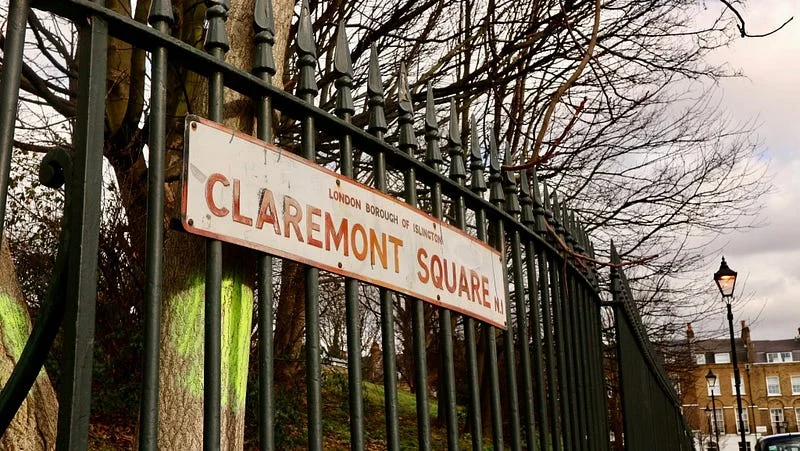
For a glimpse into the secret headquarters of the Order of the Phoenix, head to Claremont Square in Islington. This peaceful residential area is home to the early 19th-century Georgian terraces that portrayed number 12, Grimmauld Place (registered under Historic England list entry #1195562 and catalogued by Film London), Sirius Black‘s ancestral home. Recall the scene where Harry, Ron, and Hermione arrive, searching for this hidden safe house.
Today, Claremont Square remains a tranquil residential haven, offering a peaceful escape from the bustling city. Its elegant Georgian townhouses and well-maintained gardens provide a glimpse into London’s architectural heritage.
While you’re there:
- Take a stroll through the square and admire the Georgian architecture.
- Imagine the Order of the Phoenix members gathering within the walls of number 12.
Leadenhall Market: Stepping into Diagon Alley
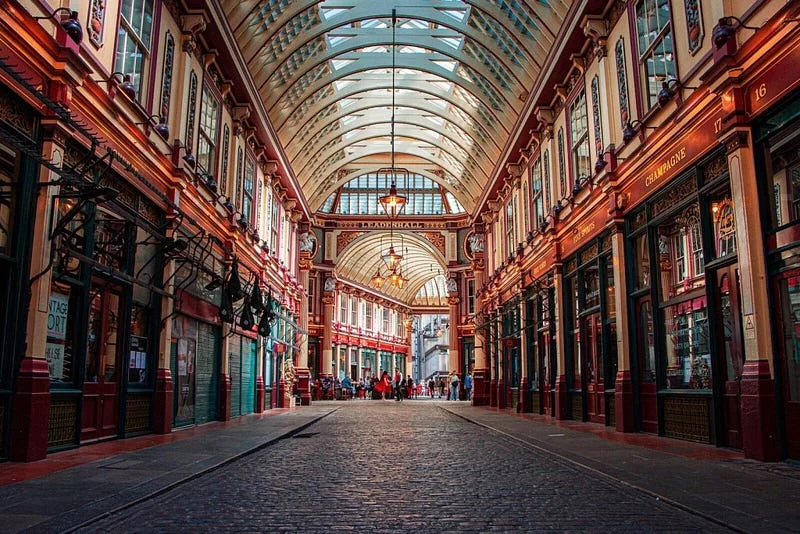
As you step into Leadenhall Market, the real-life architectural inspiration for Diagon Alley, prepare to be transported straight into the wizarding world. Designed by Sir Horace Jones in 1881, this Victorian covered market in the City of London provided the exterior filming location for the wizarding shopping street in Harry Potter and the Philosopher’s Stone. Specifically, the optic blue shopfront at 42 Bull’s Head Passage (originally an optician’s surgery) was used as the street entrance to the Leaky Cauldron pub, officially verified by Film London and registered under Historic England list entry #1065116. While you won’t find Ollivander‘s wand shop or Flourish & Blotts bookstore inside today, the market’s gilded iron roof, cobblestone alleys, and historic pubs offer an uncanny resemblance to the cinematic shopping quarter.
Even today, Leadenhall Market thrives as a vibrant hub of commerce and social activity. If you love discovering atmospheric shopping arcades across the capital, explore our guide to the best shopping centres and malls in London. Locals and tourists alike come to browse unique boutiques and savour delicious food-stall fare.
Experience the magic:
- Close your eyes momentarily and picture the bustling crowds of witches and wizards.
- Imagine the enticing smells of magical treats and the sounds of spells being cast.
- Enjoy a delicious meal or a pint of Butterbeer (okay, maybe just regular beer) at one of the pubs.
Cecil Court: A Magical Stroll Through Harry Potter’s London
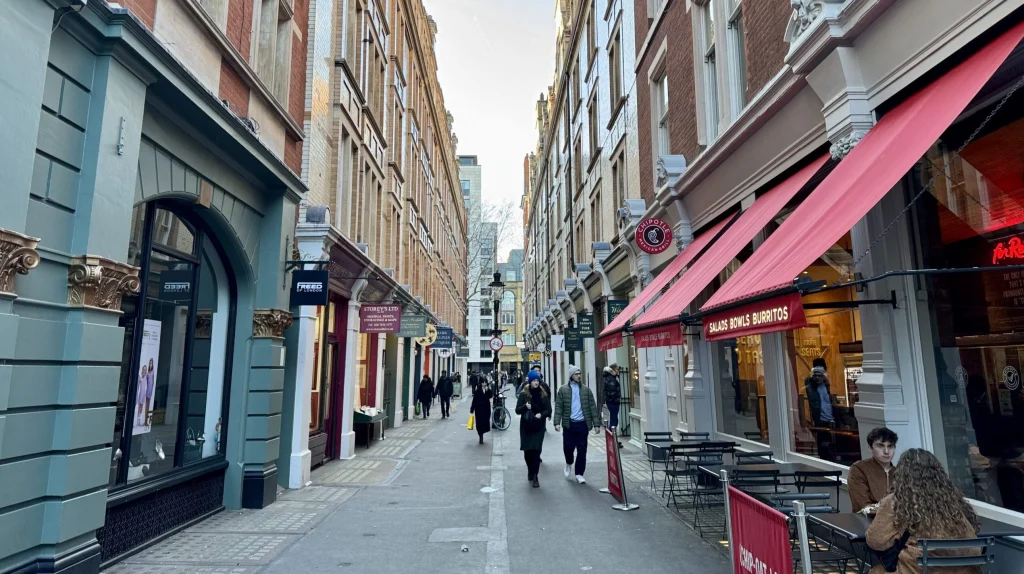
Take a stroll down Cecil Court, a charming street that feels like it’s been plucked straight from the pages of a Harry Potter book. This historic Victorian gas-lit thoroughfare, documented by the Film London historic walking archives and lined with over twenty antiquarian bookshops and esoteric curiosities, provided author J.K. Rowling with the direct atmospheric blueprint for Diagon Alley.
Today, Cecil Court retains its old-world charm, offering a haven for book lovers, collectors, and those seeking a unique shopping experience. Its independent shops and quirky atmosphere make it a delightful destination for a leisurely afternoon browse.
Discover hidden treasures:
- Browse the unique shops for antique finds and literary treasures.
- Soak up the atmosphere of this historic street.
Goodwin’s Court & Borough Market: The Two Leaky Cauldrons
Did you know that Warner Bros. filmmakers utilised two entirely distinct London locations across the franchise to portray the famous Leaky Cauldron pub? When grabbing street food at Borough Market or dining around Covent Garden, paying with a lifestyle card like Yonder earns curated dining rewards with zero foreign exchange fees.
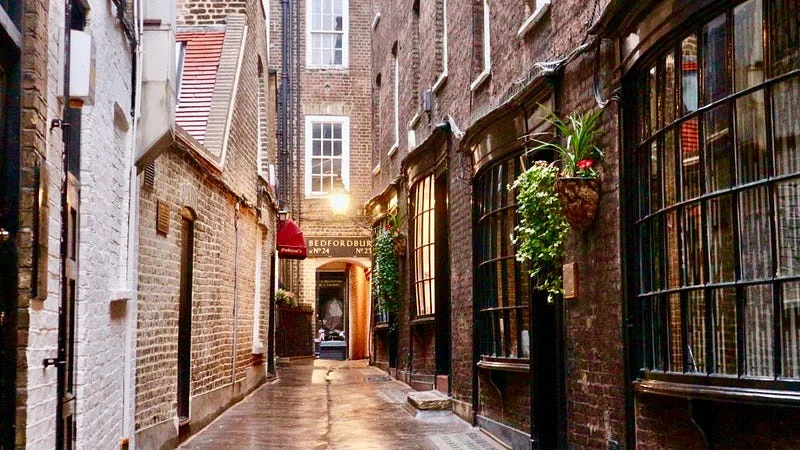
Tucked off St Martin’s Lane near Covent Garden, Goodwin’s Court (catalogued in Historic England list entry #1236166 for its intact late-17th-century terraced frontages) is a passage lined with bowed bay windows, gas lamps, and dark wood facades that provided the primary visual inspiration for Knockturn Alley and the Diagon Alley aesthetic.
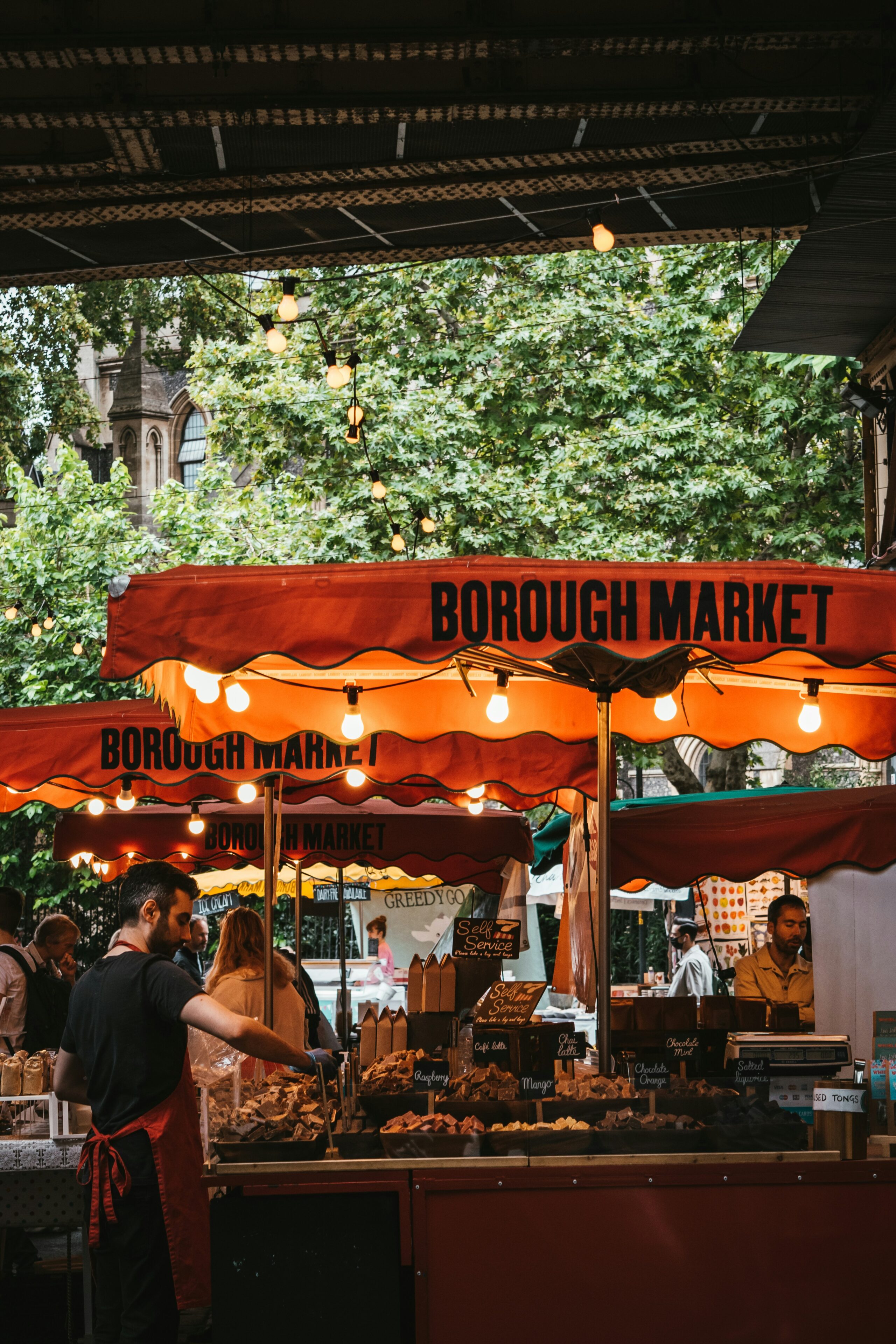
However, when director Alfonso Cuarón took the helm in Harry Potter and the Prisoner of Azkaban, the exterior location was officially moved to 7 Stoney Street, Borough Market (verified in the Borough Market Trust heritage register and Film London production directory). Situated directly underneath the roaring railway bridge adjacent to The Market Porter pub, this gritty Southwark storefront is where the manic, triple-decker Knight Bus screeches to a halt, violently setting down Harry in the pouring rain. Today, the location sits at the heart of London’s premier artisan food market.
The Expert Secret: House of MinaLima
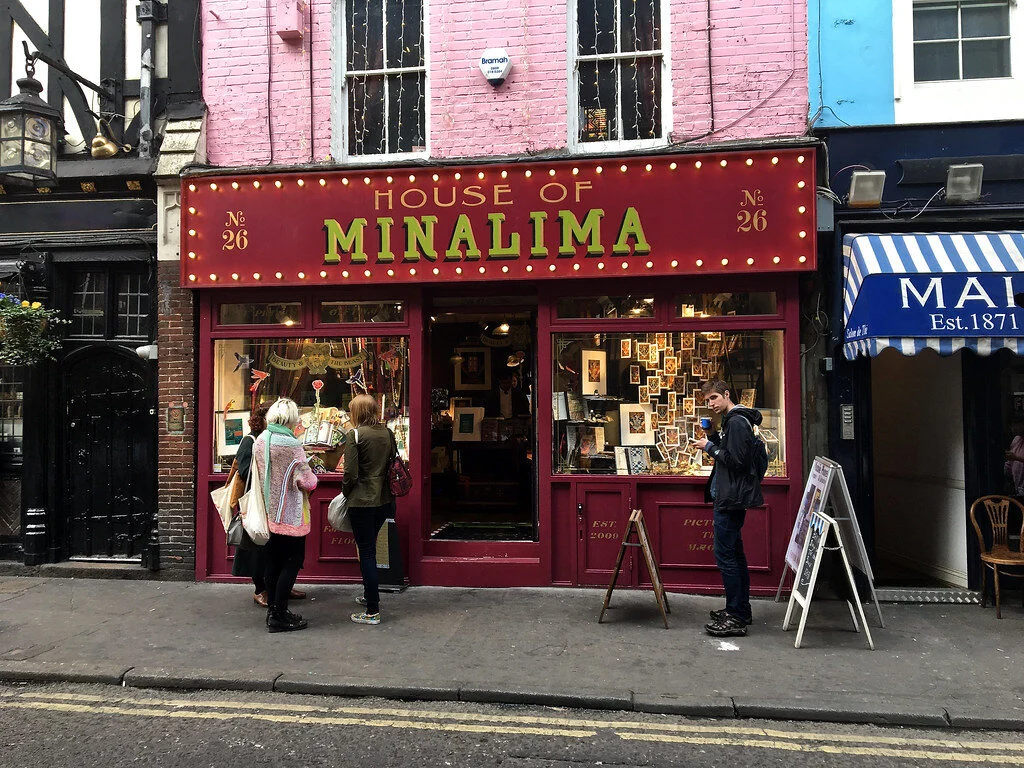
While not a filming location, this is an absolute must-visit for any true Potterhead in London. House of MinaLima is an immersive gallery and shop created by Miraphora Mina and Eduardo Lima—the graphic design duo responsible for establishing the entire visual graphic style of the Harry Potter and Fantastic Beasts films (see the official MinaLima Design Gallery archives).
Located in Soho, this multi-story wonderland is packed with authentic movie props, original prints of the Daily Prophet, Hogwarts acceptance letters, and the Marauder’s Map. It’s completely free to enter and offers a deeper, more intimate look into the wizarding world’s art than anywhere else in the city.
Westminster Bridge: A Magical Backdrop for Iconic Scenes
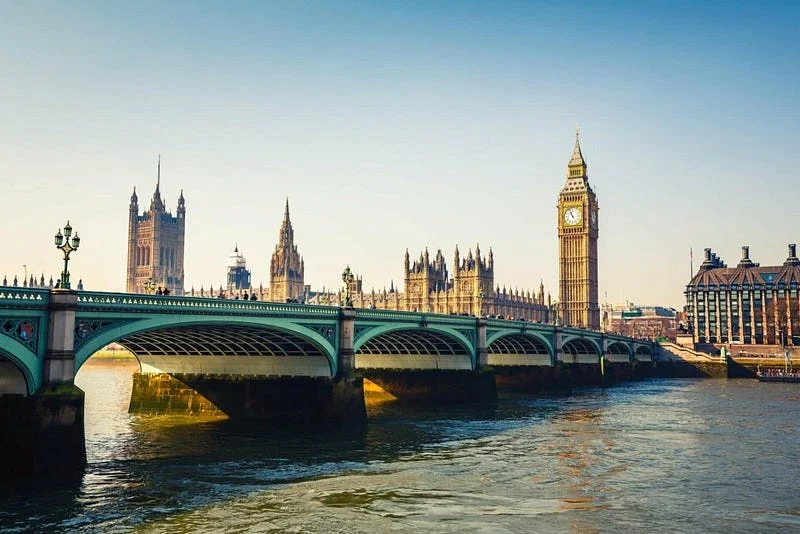
This iconic London landmark isn’t just a marvel of Victorian engineering but a key player in the Harry Potter saga. In The Order of the Phoenix, Harry and the Advance Guard sweep low over the river beside Big Ben and the Houses of Parliament, a sequence documented in the British Film Commission Thames filming register and protected under Historic England list entry #1080058. Remember the Weasley‘s daring flight along the Thames in the enchanted Ford Anglia? The bridge provides one of the most cinematic vistas in London.
Today, Westminster Bridge remains a vital artery across the Thames, connecting Westminster to the South Bank. It offers stunning views of the Houses of Parliament, Big Ben, and the London Eye, making it a popular spot for tourists and locals alike.
Enjoy the view:
- Take in the breathtaking views of the Houses of Parliament and Big Ben.
- Imagine the magical moments that unfolded on this historic bridge.
Westminster Tube Station: Rescuing Sirius Black
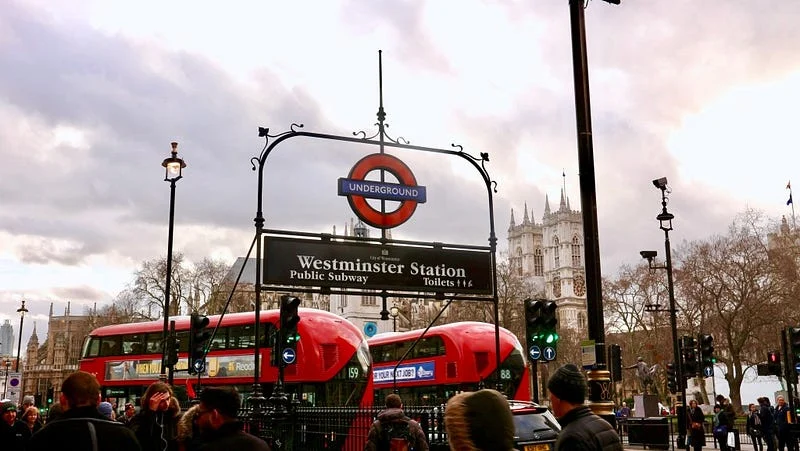
Even the London Underground has its place in wizarding folklore. Westminster Tube Station was prominently featured in Harry Potter and the Order of the Phoenix when Mr Arthur Weasley escorts Harry to the Ministry of Magic for his disciplinary hearing before the Wizengamot. In a memorable comedic sequence, Arthur Weasley struggles to comprehend Muggle transport, grappling enthusiastically with the electronic ticket barriers. To accommodate director David Yates and the production crew, the Transport for London (TfL) Film Office authorised a rare, full 24-hour closure of Westminster Station on a Sunday, making it one of the most complex logistical transit location shoots in British cinema history.
Today, Westminster Tube Station continues to serve as a vital transportation hub, connecting commuters and visitors to this historic area of London. Its central location makes it a gateway to many of the city’s iconic landmarks and attractions.
Experience the scene:
- Walk through the station and imagine the trio’s urgent quest.
- Appreciate the station’s role in this pivotal moment in the story.
Tower Bridge: Flying Cars and Emotional Farewells
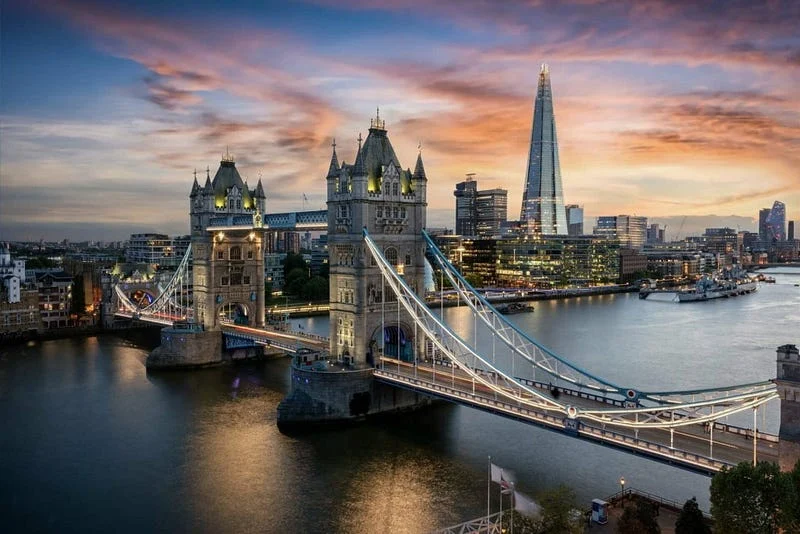
This iconic London landmark is not just a marvel of Victorian engineering, but the dramatic centrepiece of one of the franchise’s most breathtaking aerial sequences. In Harry Potter and the Order of the Phoenix, the Advance Guard — including Mad-Eye Moody, Nymphadora Tonks, Remus Lupin, and Kingsley Shacklebolt — rescues Harry from 4 Privet Drive on broomsticks. Flying under the cloak of night, the squad swoops low over the River Thames, banking tightly past Tower Bridge and HMS Belfast on their high-speed approach to Grimmauld Place. Confirmed by the British Film Commission aerial register and the official Tower Bridge Trust historical archives, the sequence combined low-altitude helicopter filming with pioneering digital visual effects to create an unforgettable London panorama.
Now a symbol of London itself, Tower Bridge continues to lift for tall ships and welcomes visitors to explore its Victorian Engine Rooms and high-level walkways.
Soak up the history:
- Take in the breathtaking views of the Thames and imagine the magical moments that unfolded here.
- Learn about the bridge’s fascinating history and its unique bascule mechanism.
Piccadilly Circus: Apparating into the Heart of London
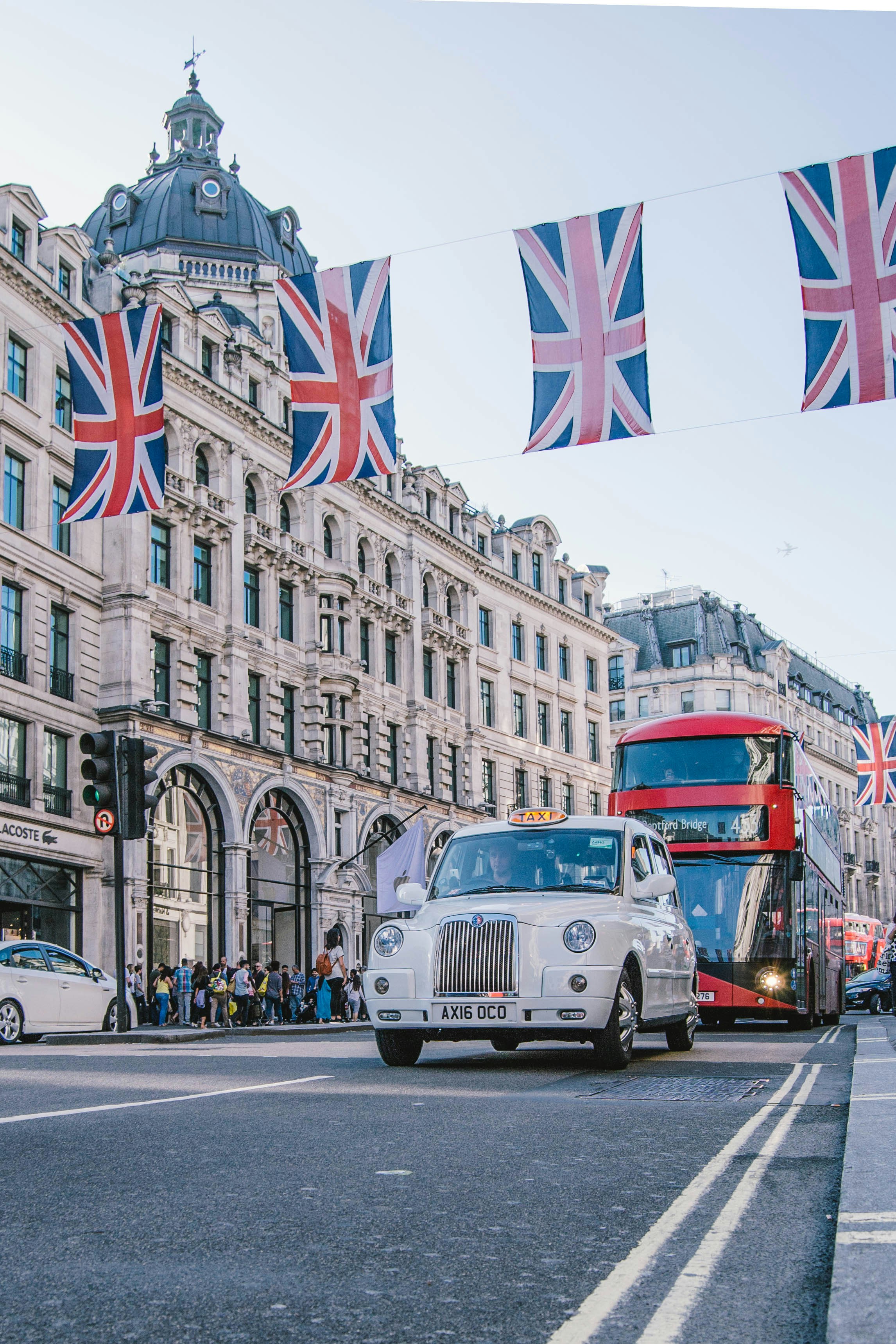
The neon advertising displays and relentless hum of Piccadilly Circus make it the beating heart of London’s West End. This world-famous intersection served as the intense backdrop in Harry Potter and the Deathly Hallows — Part 1. Immediately after Death Eaters storm Bill and Fleur’s wedding reception at The Burrow, Hermione Granger apparates herself, Harry, and Ron directly into the path of a speeding red London double-decker bus on Shaftesbury Avenue (documented in the Film London West End shoot records), narrowly dodging disaster before ducking into an all-night diner.
Today, Piccadilly Circus remains a vibrant hub of activity, drawing crowds with its iconic advertising displays, theatres, and shops. Its central location and lively atmosphere make it a popular meeting point and a must-see for any visitor to London.
Feel the energy:
- Stand amid the vibrant atmosphere and imagine the trio’s sudden appearance.
- Take in the iconic advertising displays and soak up the energy of this bustling hub.
Millennium Bridge: A Walk with a View (and Death Eaters!)
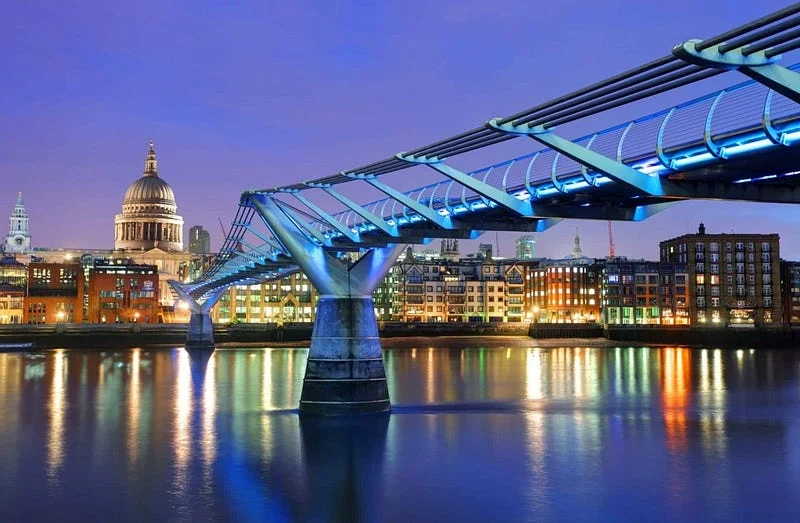
The Millennium Bridge, Norman Foster’s sleek steel pedestrian suspension bridge spanning the Thames between Tate Modern and the City, frames one of the most terrifying sequences in modern cinema. In the explosive cold open of Harry Potter and the Half-Blood Prince, a pack of Death Eaters, led by Fenrir Greyback, swoops over London, corkscrewing around the bridge cables and causing the entire structure to twist, shatter, and plunge into the river (catalogued in the Film London production register and maintained by the City Bridge Foundation). Interestingly for film buffs, this scene represents a famous cinematic anachronism: while J.K. Rowling’s sixth novel was set in 1996 and featured the fictional Brockdale Bridge, the Millennium Bridge did not open to the public until June 2000!
Today, the Millennium Bridge is a popular pedestrian route, offering stunning views and a unique perspective of the city. Its sleek design and central location make it a favourite spot for leisurely strolls and photo opportunities.
Experience the thrill:
- Walk across the bridge and imagine the Death Eaters’ attack.
- Enjoy the panoramic views and appreciate the bridge’s unique design.
St Paul’s Cathedral: Professor Trelawney’s Divination Staircase
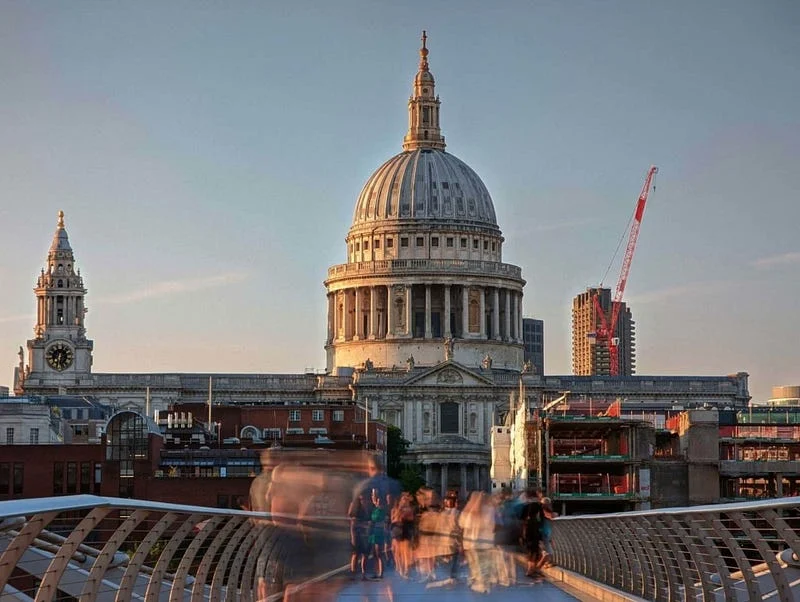
While many internet guides mistakenly claim St Paul’s Cathedral hosted Bill and Fleur’s wedding (which took place in an enchanted marquee at The Burrow), the cathedral’s actual cinematic contribution is far more architecturally fascinating. Inside the South West Bell Tower of Sir Christopher Wren’s Grade I listed masterpiece lies the celebrated Geometric Staircase (also known as the Dean’s Staircase), built in 1708, catalogued under Historic England list entry #1079112, and preserved in the official St Paul’s Cathedral architectural collection. This cantilevered stone spiral staircase was filmed as the dizzying stairway leading up to Professor Sybill Trelawney’s Divination classroom in The Prisoner of Azkaban, and was also featured when Neville Longbottom and students descend from the Defence Against the Dark Arts tower in The Goblet of Fire.
Today, St. Paul’s Cathedral remains a working church and a popular tourist destination. Visitors can admire its stunning architecture, climb to the top of the dome for panoramic views, and explore its crypt, which houses the tombs of prominent figures like Admiral Nelson and the Duke of Wellington.
Discover the history:
- Explore the cathedral’s grand interior and admire its stunning architecture.
- Learn about its rich history and the famous figures who have walked its halls.
Great Scotland Yard: The Ministry of Magic’s Secret London Entrance
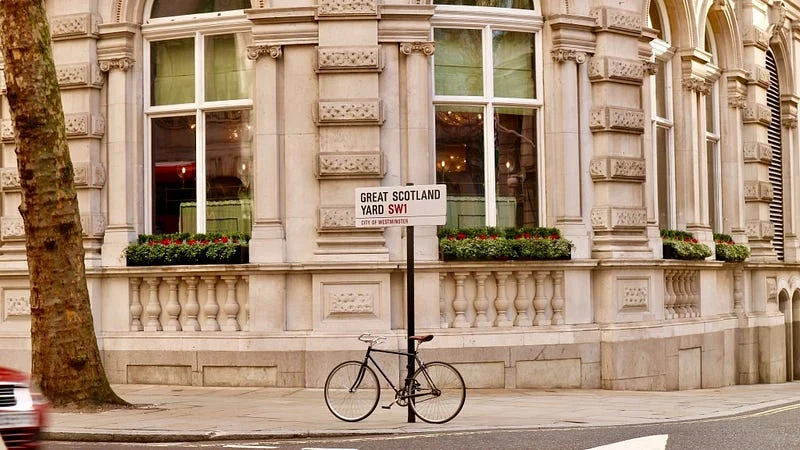
In the wizarding world, the intersection of Great Scotland Yard and Scotland Place in Whitehall serves as the primary street-level entrance to the Ministry of Magic. In Harry Potter and the Order of the Phoenix, Arthur Weasley guides Harry to an unassuming red telephone box on this corner, dialling 6-2-4-4-2 (which spells M-A-G-I-C on a standard telephone keypad) to descend as visitors into the Atrium. In The Deathly Hallows — Part 1, Harry, Ron, and Hermione return here to ambush Ministry officials with Stupefy and ingest Polyjuice Potion. Note that while the iconic red telephone box was a portable set piece brought in by the film crew (documented in the Film London street shooting registry and Historic England list entry #1223943), the grand classical stone archway connecting the government buildings remains completely authentic.
Today, Great Scotland Yard has been transformed into a luxury hotel, offering guests a unique stay in a building steeped in history and intrigue. While the Ministry of Magic might not be accessible, visitors can still admire the building’s impressive exterior and imagine the magical secrets hidden within.
Uncover the secrets:
- Admire the building’s imposing exterior and imagine the magical secrets hidden within.
- Learn about its history as a police headquarters and its wartime role as Winston Churchill’s underground war rooms.
Australia House: The Real Gringotts Wizarding Bank
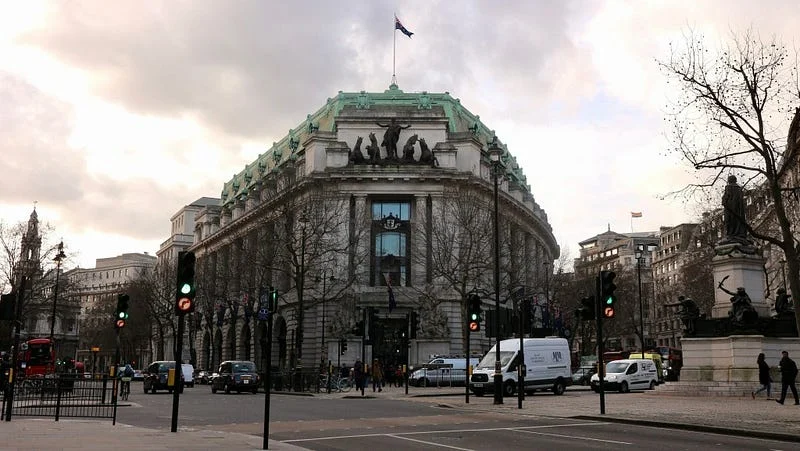
Step into the grand banking hall of Gringotts Wizarding Bank — or at least its real-life architectural counterpart! Australia House, an Edwardian building on the Strand registered under Historic England list entry #1237097 and home to the Australian High Commission, provided the opulent interior setting for Gringotts in Harry Potter and the Philosopher’s Stone. The magnificent Exhibition Hall, with its towering marble pillars, ornate chandeliers, and polished stone flooring, was where Harry and Hagrid first met Griphook to access vault 687. Because Australia House is an active diplomatic mission, general public access inside is restricted, but the grand facade and arched windows are easily appreciated from Aldwych.
Today, Australia House serves as the Australian High Commission in the UK. It’s a hub of diplomatic activity and a symbol of the strong relationship between Australia and the United Kingdom. While visitors can’t access all areas, the Exhibition Hall is open to the public and showcases Australian culture and history.
Admire the architecture:
- Marvel at the building’s imposing facade and grand staircase.
- Step inside to admire the opulent lobby with marble floors and stained-glass ceilings.
London City Hall: The Ministry of Magic’s Imposing Exterior
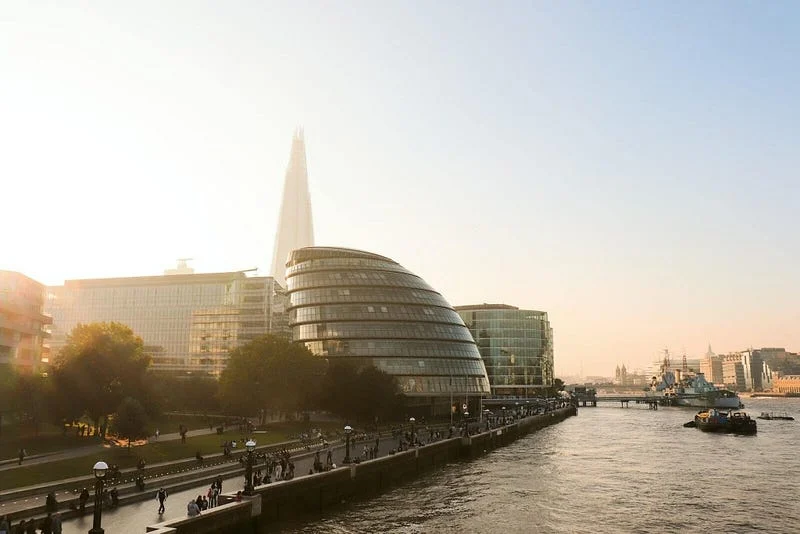
Designed by Norman Foster on the South Bank, this bulbous glass architectural landmark provided a dramatic perspective in Harry Potter and the Half-Blood Prince (recorded in the Film London location shoot register). Rather than representing the Ministry of Magic, City Hall was featured in the opening scene where Muggle office workers inside look up through the sweeping glass windows in terror as ominous dark storm clouds gather over the Thames immediately before the Death Eater strike on the Millennium Bridge.
Today, London City Hall houses the offices of the Mayor of London and the London Assembly. It’s a symbol of London’s modern governance and a key player in shaping the city’s future.
See it for yourself:
- Admire the building’s unique design and prominent location on the banks of the Thames.
- Imagine the hustle and bustle of witches and wizards entering and exiting the Ministry.
Lambeth Bridge: Escapes, Quidditch, and Dumbledore’s Army
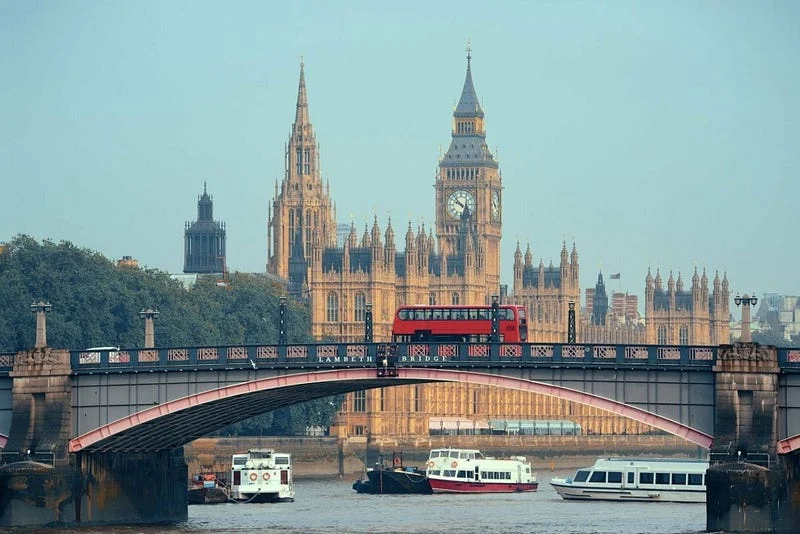
Lambeth Bridge, painted in the distinctive red colour of the House of Lords benches and protected under Historic England list entry #1357388, takes centre stage in one of the most technically ambitious stunts in Harry Potter and the Prisoner of Azkaban. Fleeing the Dursleys on the triple-decker purple Knight Bus, driver Ernie Prang navigates the bridge at breakneck speed. As two classic red AEC Regent double-decker buses approach from the opposite direction, conductor Stan Shunpike holds on while the magical bus magically compresses its chassis to squeeze through the narrow gap between them. Filming required closing the bridge to London traffic for several nights of stunt driving, coordinated through the TfL Film Office river crossings division.
Today, Lambeth Bridge remains a vital route across the Thames, connecting Lambeth to Westminster. Its distinctive red colour and elegant design make it a recognisable landmark in the London cityscape.
Relive the moments:
- Walk across the bridge and imagine the film scenes coming to life.
- Enjoy the views of the Houses of Parliament and Westminster Abbey.
Paddington Station: Harry’s First Arrival in London
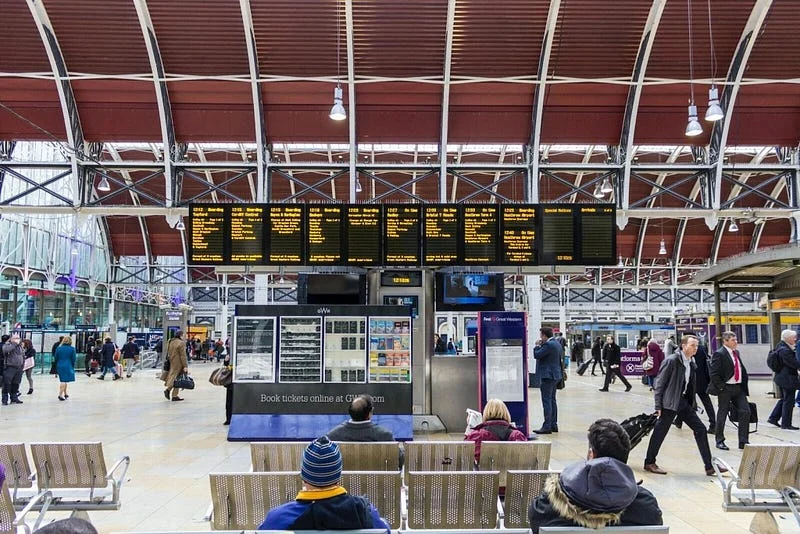
Paddington Station, a historic railway terminus designed by Isambard Kingdom Brunel and listed under Historic England list entry #1198907, holds a special place in the hearts of Harry Potter fans (archived by the TfL Film Office). It’s here that Harry first arrived in London with Hagrid, crossing the pedestrian footbridge before embarking on his magical journey.
Today, Paddington Station continues to be a major transportation hub, connecting London to destinations across the UK. Its bustling atmosphere and historic architecture make it a fascinating place to explore, even for Muggles.
Follow in Harry’s footsteps:
- Walk through the station and imagine Harry’s first impressions of the bustling city.
- Admire the station’s Victorian architecture and its iconic glass roof.
Palace Theatre: The Story Continues with The Cursed Child
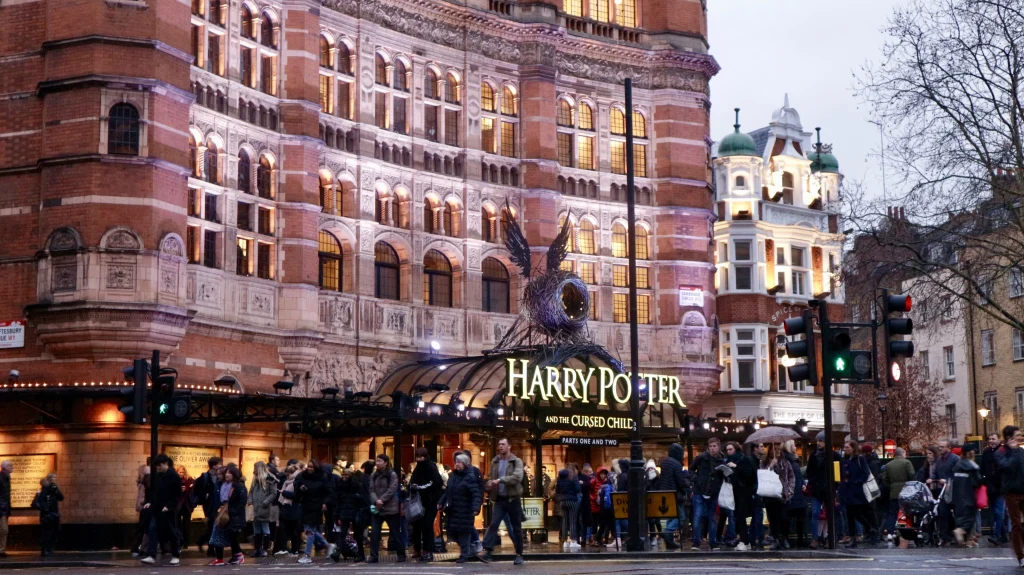
While technically not a filming location, no ultimate Harry Potter tour in London is complete without experiencing the magic live on stage. The historic Palace Theatre in the West End — Frank Matcham’s Grade II* listed Victorian theatrical landmark documented under Historic England list entry #1210091 — is the official home of the multi-award-winning stage play, Harry Potter and the Cursed Child (details via the official Harry Potter The Play production registry). Picking up 19 years after the events of the Deathly Hallows, this breathtaking two-part production brings the wizarding world to life right in front of your eyes with mind-bending practical effects.
If you’ve spent the day exploring Diagon Alley and Platform 9 ¾, settling into the magnificent Victorian auditorium of the Palace Theatre for the evening is the absolute perfect way to cap off your magical London itinerary.
Experience the magic live:
- Prepare to be amazed by the incredible theatrical illusions and the continuation of the original storyline.
- Take photos outside the theatre with the iconic “nested child” golden wing marquee.
Warner Bros. Studio Tour London: The Ultimate Harry Potter Experience
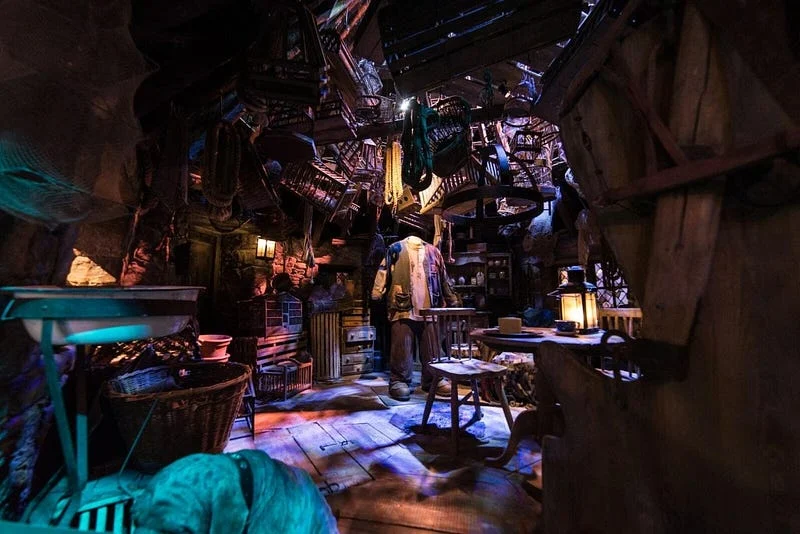
For a truly immersive deep dive into the filmmaking craft, a visit to the official Warner Bros. Studio Tour London — The Making of Harry Potter is indispensable. Located at Leavesden Studios in Hertfordshire where all eight films were based for over a decade, this world-class attraction showcases the authentic sets, including the Great Hall, Diagon Alley, Dumbledore’s Office, and the Forbidden Forest.
The Warner Bros. Studio Tour London continues to enchant visitors of all ages, offering a unique opportunity to step into the magical world of Harry Potter and experience the filmmaking magic firsthand. It’s a testament to the enduring popularity of the series and the creativity of the filmmakers who brought it to life.
Explore the magic:
- Wander through the iconic sets, including the Great Hall, Dumbledore’s office, and Hagrid’s hut.
- See the actual props and costumes used in the films.
- Learn about the special effects and filmmaking techniques that brought the wizarding world to life.
The studio tour is open all year round, so there is no reason to postpone your visit. Pro tip: Always book your tickets online in advance as peak weekend slots sell out weeks ahead. Check verified operator promotions directly with Evan Evans Tours (official Warner Bros. transfer packages) and Tiqets (top London attraction passes), or compare options via GetYourGuide and Viator.
So what are you waiting for? Dive into the enchanting world of Harry Potter in London today!
Authoritative Sources & Archival Research
Tips for Visiting Harry Potter Locations in London
When to visit for fewer crowds
Popular spots like King’s Cross and the Millennium Bridge get busy at weekends and during school holidays. Arrive early on a weekday morning for clearer photos, and check opening times for indoor sites such as the Palace Theatre and Warner Bros. Studio Tour, which need booking ahead.
Free versus paid locations
Many of the best filming spots — King’s Cross exterior, the Millennium Bridge, Leadenhall Market and Borough Market — are completely free to wander. Paid experiences such as Platform 9¾ photo ops and the Warner Bros. Studio Tour are worth budgeting for separately if you want the full behind-the-scenes magic.
Getting around between sites
Most central locations are walkable in clusters, and a contactless tap or day cap on the Underground keeps travel cheap. Group nearby sites together — the City spots, then the South Bank — to save time and fares as you go.








Leave a Comment
Join the community discussion
Sign in to share verified discount codes, report expired deals, or connect with fellow smart savers.
No comments yet. Be the first!
Be the first to share an active discount code, referral link, or shopping experience with our community.